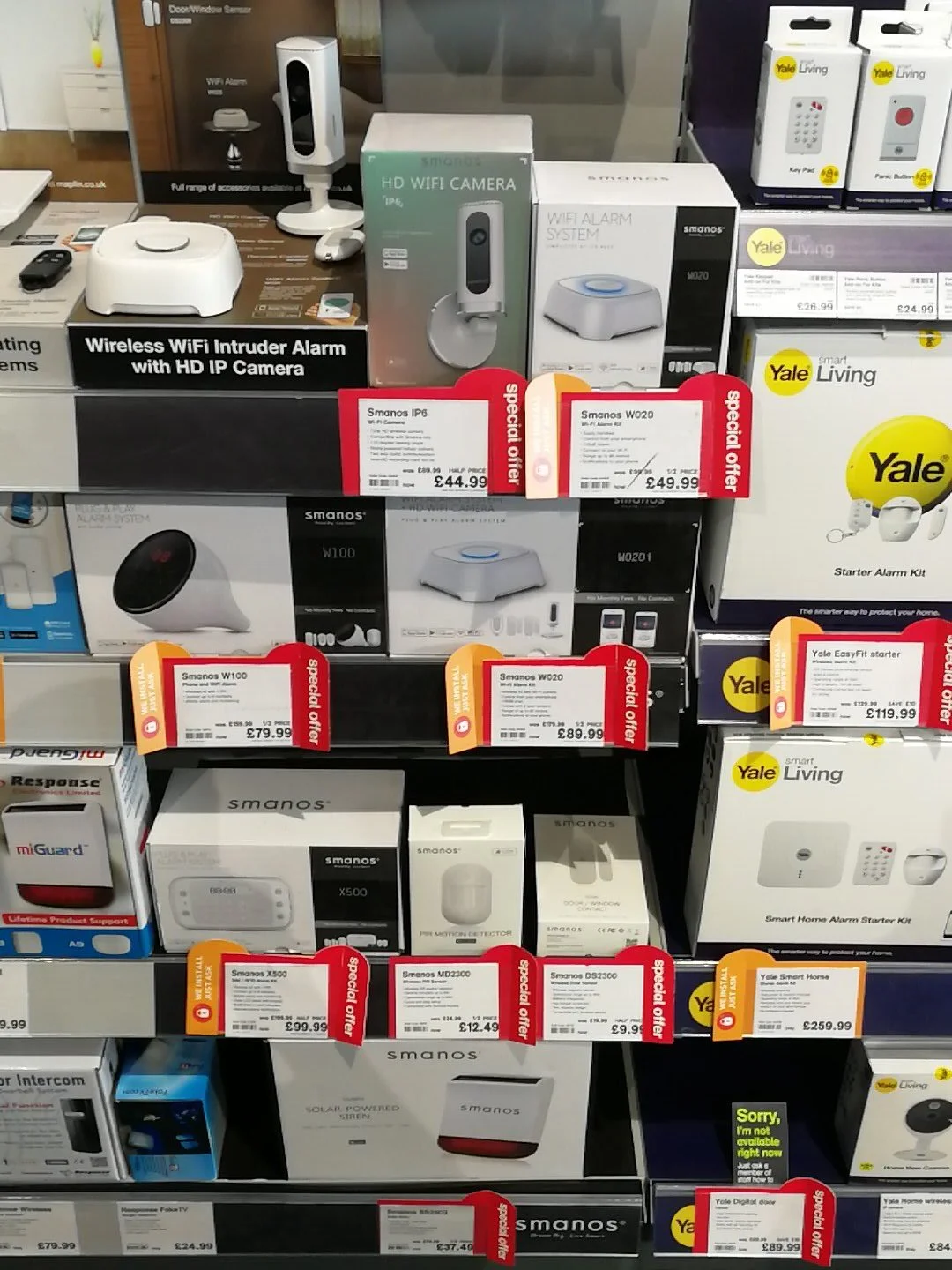
Yes, when it gives the partner a reason to invest and leaves both sides a worthwhile business. I would start with the channels it can develop, agree what each side will commit and decide how progress will be reviewed.
Exclusivity can give a distributor more confidence to commit stock, people and marketing support. The problem is assuming that one distributor is equally strong everywhere.
I rarely come across a partner that can credibly cover every channel. Someone who understands Amazon may not be the right person to develop DIY retail. Even “retail” is too broad: consumer electronics, DIY, specialist shops and installers involve different buyers and different work.
Start with channel exclusivity, not just a country
Before discussing exclusive UK rights, compare the partner’s strongest accounts and categories with the channels you want to develop.
Put your existing business alongside the proposal: your own website, Amazon, direct accounts and other distributors. Marketplace selling and supplying online retailer accounts are different jobs; my online-retailer guide explains the distinction.
Write down the products, channels and customers being discussed. That gives you a commercial brief for the agreement, rather than leaving both sides to interpret “exclusive”.
Can a distributor grow into channels it does not cover yet?
Yes. I would not reject a good partner simply because it does not cover every target channel today. Giving it room to grow can be better than appointing several partners who have little reason to develop the brand.
Separate existing capability from the development plan. Who will open the new accounts? What people, training or marketing will be needed? What will your brand contribute?
One option is to start with a defined scope and agree what evidence would support adding another channel. That could include account progress and investment in the people needed to develop it. This is something to negotiate, not an automatic right to expand or a standard clause for every agreement.
Broader exclusivity can also make sense from the start when the investment and plan justify it. The point is to give the partner room to grow without reserving channels that neither side is prepared to develop.
What if you want to keep your online sales?
I come across brands with substantial online sales that want to keep that business entirely to themselves, while expecting a new distributor to generate large volumes from the remaining channels.
Keeping your existing business is understandable. But what is left for the partner to build, and can it earn enough to justify the investment? Equally, a proposal to take over established accounts needs to explain what the distributor will add.
The answer depends on the stage of the brand. A recognised name with strong demand and a funded marketing plan presents a different opportunity from a lesser-known product that needs explaining. Ask whether there is enough demand to support the proposed sellers, and who will pay to develop more of it.
This does not mean online and retail cannot work together. I cover the pricing, stock and account-ownership issues in why Amazon success can make European retail expansion harder.
Keeping your own online accounts is different from banning a distributor from selling online. Get advice on those restrictions and, if you also sell directly, on what future pricing information you can share. Do not enforce fixed or minimum resale prices on distributors or retailers. These are points covered by the CMA’s guidance on vertical agreements.
What should both sides commit to?
| Area | What I would want agreed |
|---|---|
| Scope | Products, channels and customers covered, with existing accounts and direct sales explicitly addressed |
| Distributor investment | Opening stock, a named commercial owner, sales-team access and account development under the agreed trading terms |
| Brand support | Product availability, training, marketing activity and marketing development funds (MDF), with budgets and responsibilities |
| Expansion | Channels the partner serves now, those it will develop, and the resources needed |
| Keeping exclusivity | The purchases, account progress and other agreed measures used to review the rights, with reporting periods |
| Review and exit | Renewal decisions, what happens if either side misses commitments, and arrangements for remaining stock, open orders and support |
Agree what MDF will pay for and how the activity will be reviewed. Use the retailer and distributor margin calculator to check whether the proposed terms leave room for the work.
Be specific about what counts towards keeping exclusivity. If the only measure is purchases, the partner could meet it while stock remains unsold. I would consider repeat orders and account progress alongside purchases, with stock and sell-out reporting where available. Agree what evidence you will use when full sell-out data is not available.
Agree access to the sales team before signing
Getting the distributor’s management behind the brand is one thing. Getting its salespeople confident enough to sell it is another.
Before granting exclusivity, I would agree access for training, who will make the relevant introductions and how we can support early account discussions. For connected products, that includes compatibility, setup and any subscription as well as the hardware.
Be clear what you are paying for. A partner developing accounts is doing more than one buying and supplying stock with limited sales activity. A service-only 3PL stores and ships your stock. I would not grant exclusive market-development rights on the strength of warehousing and fulfilment alone.
Your brand has a part to play too: marketing that supports demand, useful product content and reliable stock. Exclusivity does not transfer all responsibility for growth to the distributor.
Agree what happens if commitments are missed
There is no single minimum order or contract length I would recommend for every brand. Targets should reflect the opportunity, buying cycle and investment.
If the brand delays stock or the promised marketing, that needs to be considered when reviewing the distributor’s results. Equally, an exclusive partner needs to follow through on its commitments.
Agree the options before signing. Depending on the contract, these might include time to put things right, a narrower scope, a move to non-exclusive terms or ending the arrangement. Include remaining stock, open orders, warranties and ongoing support. A missed target does not automatically let you appoint someone else.
My role is to assess the commercial arrangement. Have a lawyer check how the agreed scope, review and exit will work. UK and EU rules need separate consideration; the CMA guidance and European Commission guidelines explain their respective frameworks.
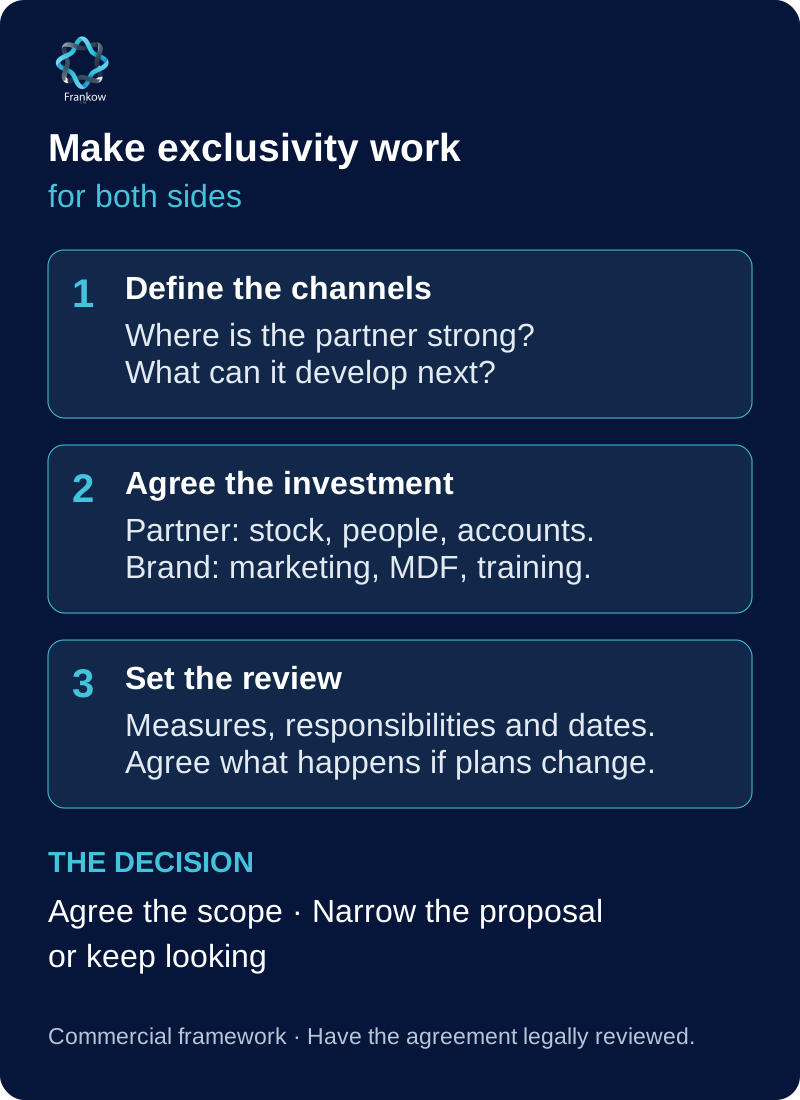
My view: make exclusivity worth investing in
I am not against exclusivity. Done well, it gives the distributor a reason to invest and the brand a committed partner with room to grow.
I would come out of the discussion with one of three decisions: agree a clearly defined arrangement, narrow the proposal until the commitments match the rights, or keep looking.
Once appointed, developing the distributor relationship becomes the next job.
Considering a UK distribution proposal? Tell me what you sell, where it sells now and what the partner is asking for. Through Frankow Ltd, I can help assess the channel fit, commercial terms and commitments before you sign. Discuss your distribution proposal.