An established brand can begin building a commercial presence in the UK and Europe before hiring a complete local team. It needs a focused market plan, appropriate partners and someone responsible for moving the work forward, supported by people at headquarters who can make decisions.
When I look at an overseas brand’s expansion plans, I want to understand what needs to happen locally. Who will develop the distributor relationship? Who can represent the brand at a useful exhibition? Who understands which PR agency might fit the category? Who follows up when a promising meeting turns into questions about pricing, stock or support?
These responsibilities help define the team the business actually needs. Some can sit with headquarters, some with specialist partners and some with a local commercial lead. Making that division clear gives the brand a practical starting point before it commits to a larger operation.
What does local commercial representation involve?
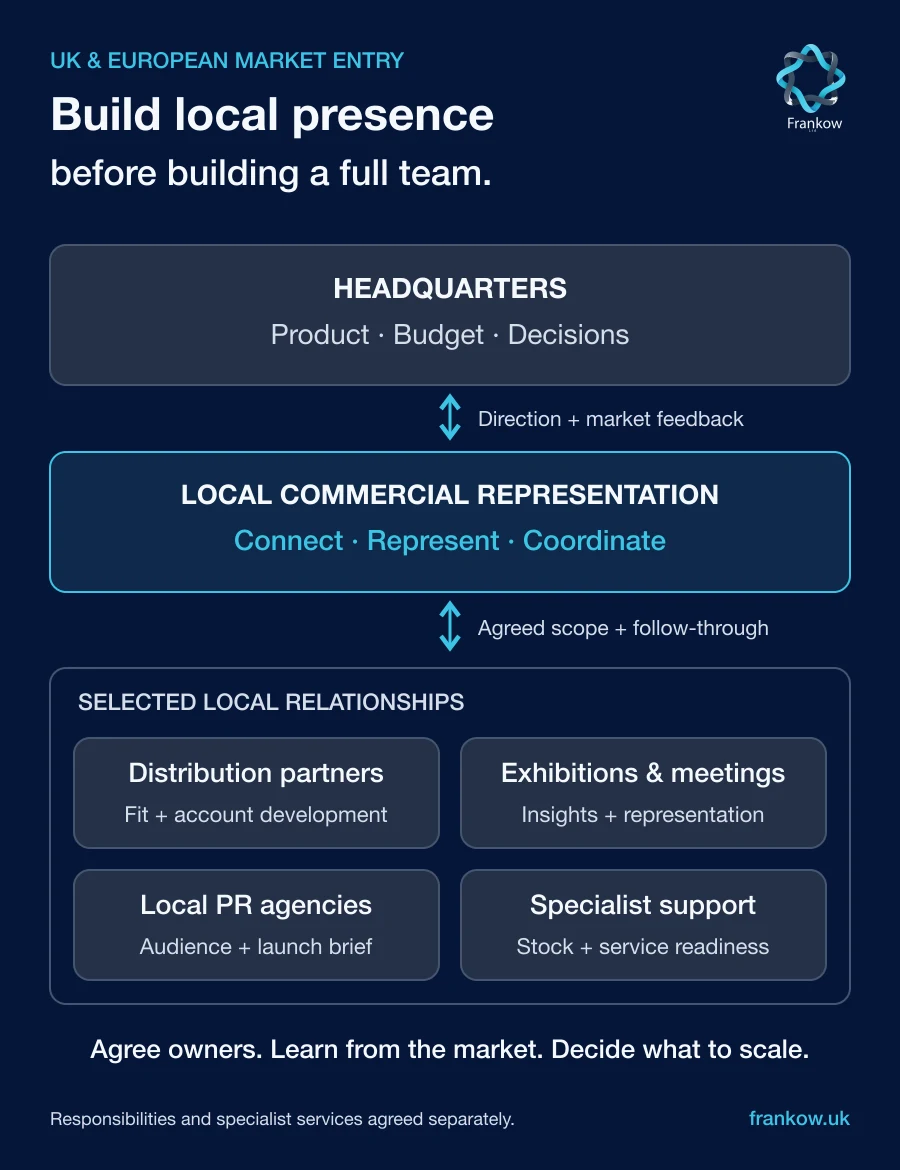
Local commercial representation connects a brand’s headquarters with customers, distribution partners and the day-to-day work of developing a market. The scope can include market feedback, partner development, meetings, exhibition representation and coordination of agreed commercial activity.
In my work, the value comes from understanding the product well enough to represent it properly and knowing when a decision needs to go back to headquarters. I need to understand the pricing, channel priorities, support arrangements and limits of my authority. A buyer should receive an accurate answer, and the brand should know what has been discussed on its behalf.
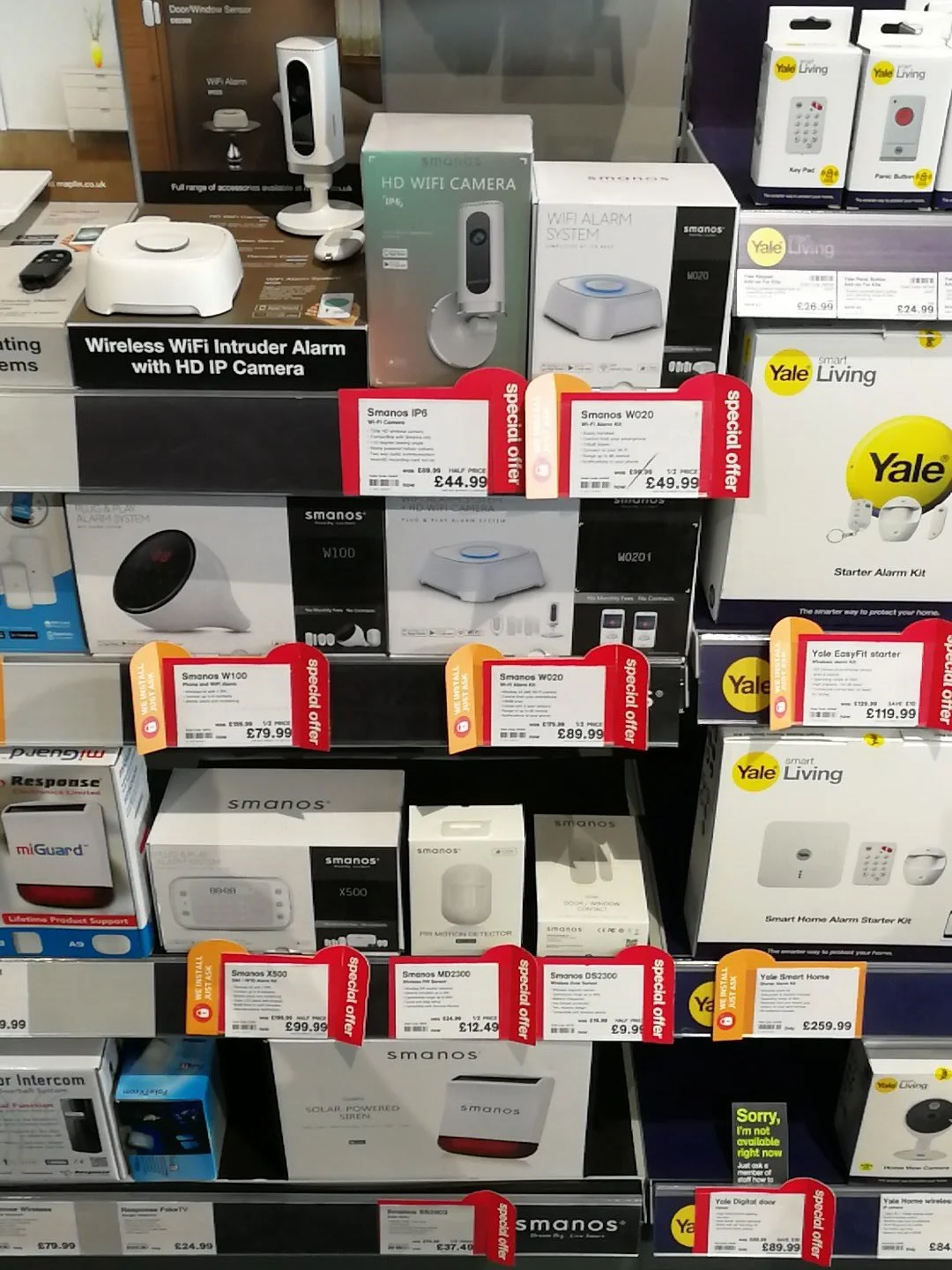
During my brand-side work with Smanos/Chuango, I worked across UK and DACH distribution and retail development, promotional planning and OEM partner support. That meant connecting an overseas manufacturer’s priorities with local partner conversations and ongoing account development. The Smanos case study records that employer-side experience, including the documented UK retail display and continental European online listing.
That experience informs how I approach local representation today: agree the commercial objective, establish who can decide what, and keep the next actions visible.
An existing network gives you a starting point
My wider network of existing distribution partners gives me a starting point for assessing where a brand might fit. I still need to understand whether a particular partner’s customers, portfolio, capabilities and priorities match the opportunity.
A distributor may have strong retailer relationships but limited capacity to explain a technical product. Another may understand the category well but need more support with marketing or account development. For connected products, software compatibility, demonstrations and after-sales support can affect the choice as much as geographic coverage.
Before making an approach, I want to be able to explain why the opportunity deserves that partner’s attention. That includes the customer need, product differentiation, commercial terms and support the brand can provide.
Existing relationships make those conversations possible; each introduction still needs a reason. Once a partner is interested, the brand needs to invest in activation and follow-through. I cover that stage in why appointing a European distributor is only the beginning.
Which exhibitions deserve the brand’s time and budget?
I would choose an exhibition around the people the brand needs to meet and the questions it needs to answer. Depending on the objective, attending with a prepared meeting schedule may be more useful than immediately investing in a stand.
At eCommerce Expo and Technology for Marketing 2026, my conversations with fulfilment and cross-border service providers helped me examine how an overseas brand could assemble parts of its route to market. My published reflections on the shows explain the resulting questions about commercial ownership, product information and customer support. Those were useful insights for market-entry planning, rather than evidence of retail-buyer demand.
For a brand seeking distribution, I would ask whether the relevant distributors and buyers actually attend, whether the category has a meaningful presence, and whether meetings can be arranged in advance. For a software-connected product, integration partners may be just as important as resellers.
Where I represent a brand at an exhibition or local meeting, we should agree the purpose beforehand: which opportunities to explore, what I can discuss, which commitments need approval and how follow-up will work. The useful output is a record of relevant conversations, questions, decisions and next steps.
Where local PR-agency contacts fit
My contacts with local PR agencies can help identify potential support for a particular market or product category. Selecting an agency still requires a clear brief, an appropriate budget and evidence that its experience fits the audience the brand needs to reach.
I would begin with the commercial situation. Is the product available locally? Can a reviewer obtain a suitable sample? Are the claims, compatibility information and support arrangements clear? If coverage creates interest, where can someone buy and who will answer their questions?
The agency brings its communications expertise. My role can be to connect that work with distribution, product readiness and the wider launch plan, within the agreed scope. Agency fees and deliverables need their own agreement; an introduction does not guarantee coverage or sales.
Agree who owns the work before adding more suppliers
For UK and European market entry, I would put the main responsibilities on one page. The table below is a starting framework to agree with the brand and its partners, rather than an assumption about what every distributor or representative includes.
| Work to agree | Possible local contribution | What headquarters needs to own |
|---|---|---|
| Market and channel priorities | Gather market feedback and assess potential routes | Set objectives, investment limits and decision criteria |
| Distribution partners | Assess fit, develop conversations and coordinate next steps | Approve terms and provide product, pricing and supply information |
| Buyer meetings and exhibitions | Select relevant opportunities, represent the brand and follow up | Agree the proposition, samples, budget and negotiating authority |
| PR-agency coordination | Identify suitable contacts and connect activity with the launch | Approve agency scope, spending, claims and materials |
| Product and sales readiness | Gather local questions and identify missing information | Supply accurate specifications, compatibility and support commitments |
| Stock, returns and support | Coordinate agreed partners and flag gaps | Assign accountable owners and fund the agreed service |
| Commercial review | Maintain an opportunity record and recommend next actions | Make timely decisions on priorities, resources and continuation |
A local representative also needs a named person at headquarters who can resolve questions. Delayed pricing, unavailable samples or unanswered technical issues can leave a well-prepared conversation waiting for weeks.
Europe needs a sequence of market decisions
I would approach European expansion through selected markets and channels, with a reason for the order of entry. The UK and individual European markets can require different partner choices, language support and ways of presenting the product.
My UK and DACH experience, including German-language capability, is useful in those conversations. For each additional market, I would assess which relationships and capabilities are relevant and where further specialist support is needed. Legal, tax and regulatory arrangements belong with the appropriate advisers alongside the commercial plan.
Illustrative example: an established connected-device brand is considering the UK and Germany. A useful first stage could compare suitable distributors, customer-support readiness and the meetings available at relevant exhibitions. It might then prioritise one market while closing specific gaps in the other. The decision should follow the evidence and the brand’s capacity to deliver.
When is it time to hire a local employee?
A permanent local hire becomes easier to define when the business understands the recurring workload, the skills required and the economics supporting the role. Before then, a focused commercial mandate can help establish what the job actually needs to be.
I would agree an initial review period, often structured around a 90-day plan. It should show which partners have been assessed, what customer conversations have revealed, which opportunities are progressing and what is preventing the next step. Revenue may take longer in distribution and retail, so the review also needs to examine the quality of the activity and the commitments made by each side.
If sustained work now requires dedicated daily coverage, the case for a permanent hire may be stronger. If the proposition or support model still needs work, adding headcount may leave the same problems unresolved.
For an established brand preparing a funded UK or European expansion, my UK & European Market Entry Assessment brings these decisions together: market priorities, partner requirements, local responsibilities and the gaps to close before committing further resources.
The aim is to build a local presence the business can support, learn from it, and make the next investment with a clearer understanding of what the market requires.