For an established overseas brand, a retail listing can look like the breakthrough that makes UK or European expansion worthwhile. But before committing to a rollout, I would ask a different question: is this the right channel for the product, and can the business fund and support what happens after the first order?
Retail can provide visibility, physical demonstration and access to customers through an established retailer. It also brings costs and responsibilities that need to be understood before launch: channel margins, marketing support, displays, staff training, store visits, replenishment and returns.
My approach to UK and European market entry starts with that commercial assessment. The recommendation may be a retail rollout, a focused market test, an online-first launch—or resolving specific gaps before investing further.
What Smanos and Harvey Norman taught me
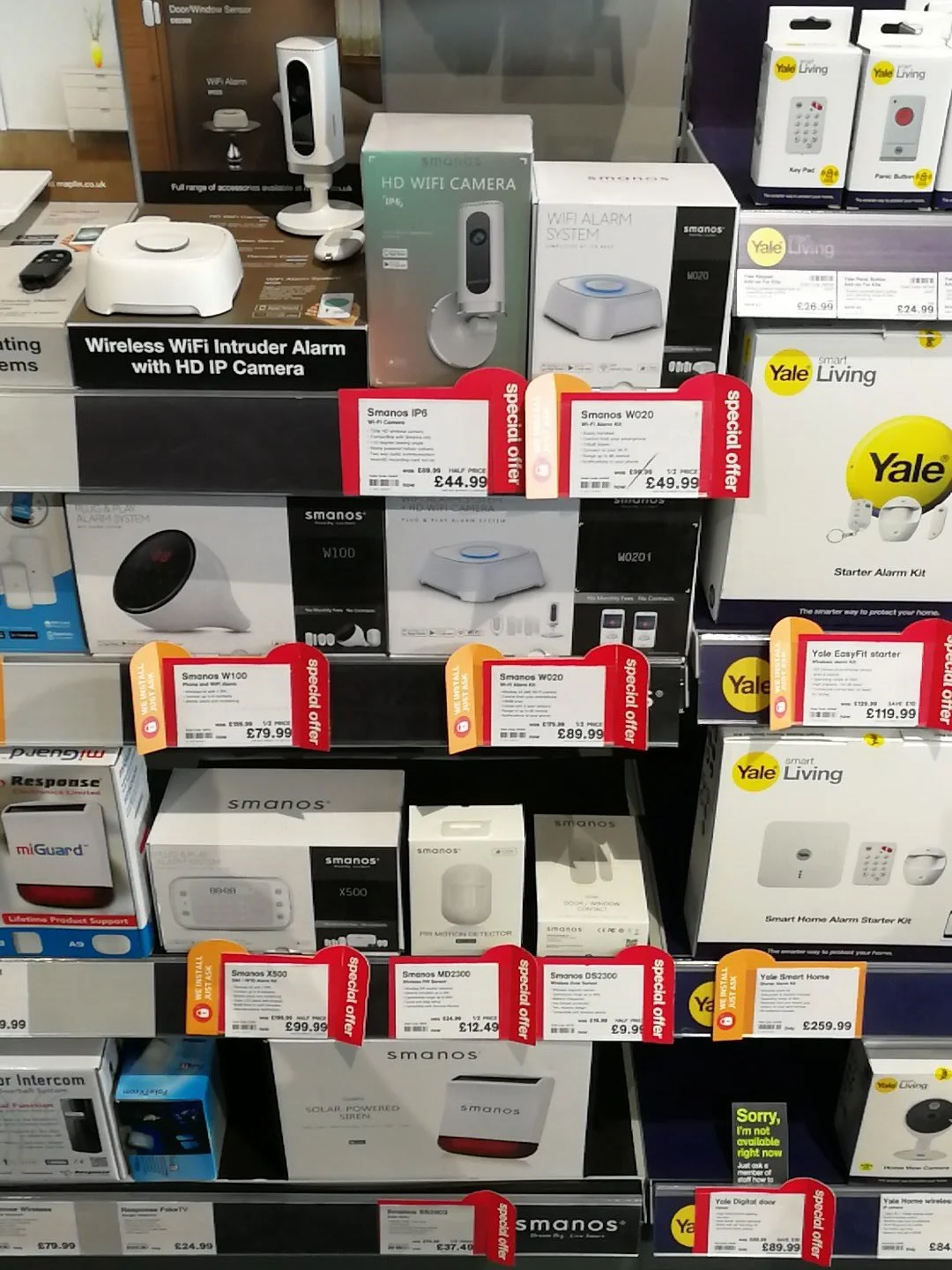
During my brand-side work with Smanos/Chuango, I worked on UK and DACH distribution and retail development, including Maplin in the UK and MediaMarkt channel development. The documented examples include a physical Maplin display and a MediaMarkt online listing.
That work involved connecting an overseas manufacturer’s priorities with local distributors, retailer conversations, promotional planning and ongoing account development.
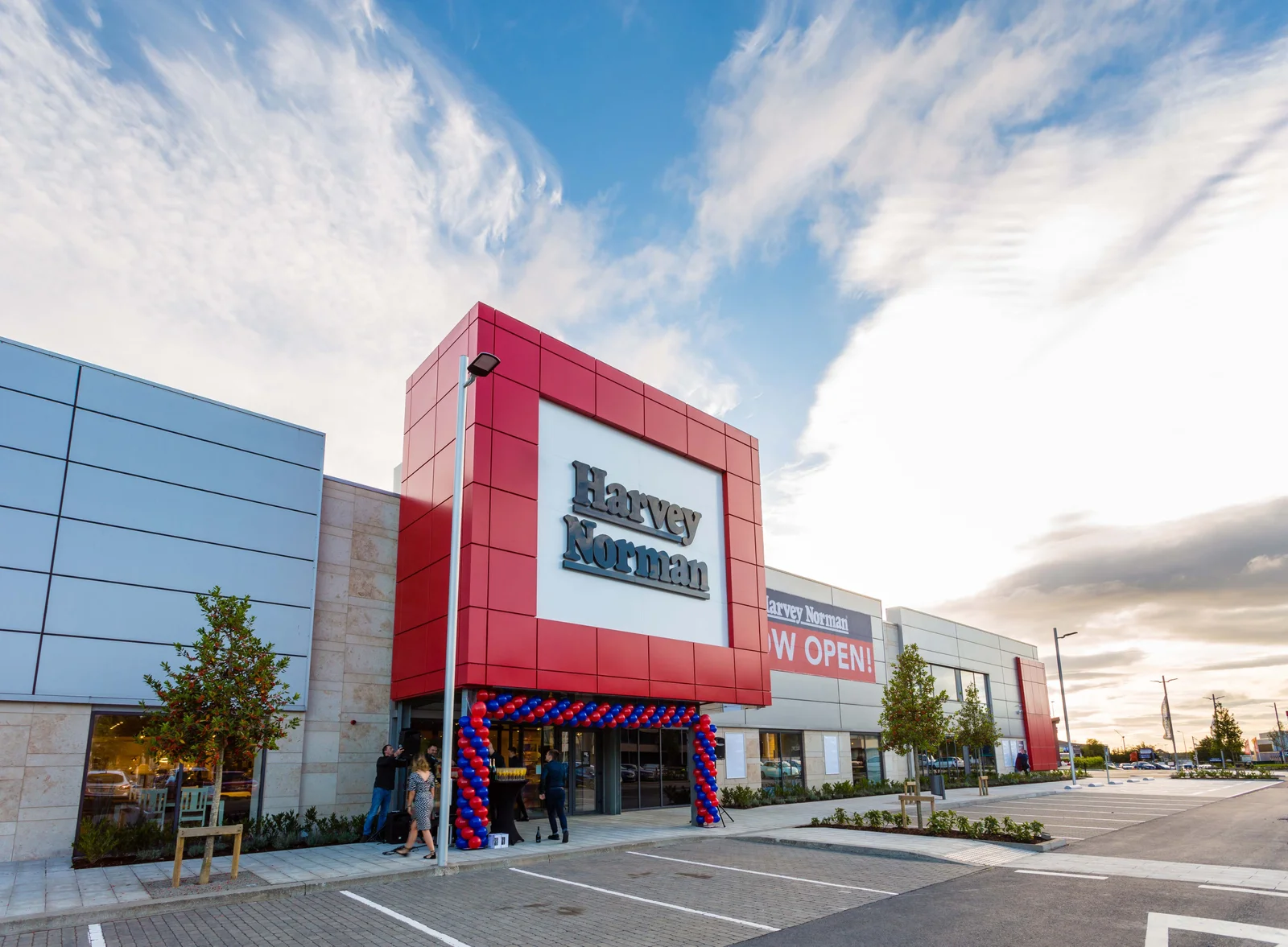
Later, in my employer-side work on the Harvey Norman Ireland project, I coordinated the local distributor, retailer and point-of-sale manufacturer for a connected-product rollout across 16 stores, including presentation and launch training.
Harvey Norman was also a useful testing ground. Retail activity is not always about demonstrating that a brand is already successful. It can help test whether the proposition fits the market: can customers understand it, can staff explain it, and does the presentation support the intended use case?
The distinction matters. A rollout designed to learn should have clear questions and review points. A rollout designed to scale needs evidence that the business can support expansion.
Read the Smanos UK and DACH case study and the Harvey Norman Ireland rollout case.
Should a technical product launch online first?
For products that need explanation, online can be a practical starting point.
A product page can combine app screenshots, compatibility information, demonstrations, setup guidance and customer reviews. Buyers can explore the detail at their own pace and return to it before purchasing.
A store can deliver a strong explanation too, particularly when customers benefit from handling or trying the product. But that experience needs to be designed and maintained. A box on a shelf may not explain why a connected device is useful, what it works with or whether an additional service is required.
I would compare the routes against the actual buying decision:
| Buyer need | Question for the channel decision |
|---|---|
| Understand a technical proposition | Can the explanation work through content, a demonstration or both? |
| Check compatibility and setup | Where will customers find reliable answers before buying? |
| Handle or try the product | Does physical experience materially help the decision? |
| Get help after purchase | Who owns support, and can they deliver it in the intended market? |
| Buy with confidence | What evidence, reviews and retailer or brand support are available? |
Online-first is not automatically cheaper once acquisition, content, fulfilment and returns are included. Equally, retail should not be the default simply because a buyer is interested.
The comparison should cover the full route to market. Distributor, Amazon or direct retail? explores that choice in more detail.
Understand the investment, including MDF
A retail plan needs a budget beyond the first shipment.
Market development funds (MDF) are agreed resources used to support market or channel development. Depending on the arrangement, support might include promotional activity, retailer campaigns, demonstrations, training or launch materials. The terminology and commercial terms vary between partners.
Before agreeing that support, establish:
- Which activities the budget will fund.
- Who approves and delivers them.
- What evidence of execution will be provided.
- How performance will be reviewed.
- Whether the commitment is one-off or recurring.
Displays, demonstration units, point-of-sale production, training and store visits also need owners and funding.
A substantial marketing commitment may help secure retailer buy-in. It does not establish that the activity will be executed well or produce profitable sales.
Distinguish stock in from sales out
Sell-in is stock sold into the channel—for example, from the brand to a distributor or retailer. Sell-out is the onward sale to the end customer.
The opening order tells you that a partner has committed to stock. It does not, by itself, prove customer demand or a repeatable commercial model.
Before launch, agree what information will be available about customer sales, stock levels, replenishment and returns. Where possible, review performance by product and location so that the response can be specific.
A useful review asks:
- Is the product available and presented as intended?
- Are customers buying it, and which products are moving?
- Do staff understand the proposition?
- Is stock replenished when needed?
- Are returns revealing an expectation, compatibility or support problem?
The objective is to understand what needs changing before committing more resources.
Why execution needs the right local partners
For an overseas brand without a local team, a specialist distributor can take on a substantial amount of commercial and operational work.
That capability comes at a margin cost. The question is whether the agreed responsibilities justify the economics—and whether the partner has the people and processes to deliver them.
Retail execution can involve coordinating display manufacturers, training staff, arranging regular store visits, checking demonstrations, maintaining product information and following through on replenishment. Even the condition of the packaging matters: damaged or tired-looking boxes can undermine a premium presentation.
Some of that work may sit with the retailer, a merchandising agency or the brand itself. It should not be assumed to be included simply because a distributor has been appointed.
Agree the responsibilities, reporting and follow-up before launch. Distribution and partner development should cover activation and ongoing execution as well as finding the partner.
Use a focused launch to test market fit
An initial retail launch can be structured as a commercial test rather than an immediate commitment to a wider rollout.
Illustrative example: an established connected-device brand selects a limited range and an agreed group of stores. Before launch, the partners define what they want to learn about presentation, customer questions, staff confidence, sales and support.
They also agree who will collect that information and when they will decide whether to expand, adjust the proposition or pause.
There is no universal store count or sales threshold that makes such a test successful. The criteria should reflect the product’s economics, the retailer’s expectations and the brand’s objectives.
The value comes from making the next investment decision with better evidence.
Start with a UK & European Market Entry Assessment
Before recommending a retail rollout, I want to understand the brand’s existing sales, priority markets, channel economics, partner requirements and ability to support the launch.
The UK & European Market Entry Assessment is a paid, fixed-scope review of those decisions. It produces a recommendation to proceed, close specific gaps or defer, supported by a 90-day action plan.
For a brand considering retail, the assessment can examine whether retail, distribution, Amazon or direct online sales offer the most suitable starting point—and what each route would require from the business.
The aim is to choose a route the brand can fund, execute and learn from, with a clear understanding of the commitments involved.