The right UK market-entry route is not determined by which channel is largest. I look at the evidence the brand already has, its margins, stock position, internal capacity and the amount of local execution the product needs. Amazon, distribution and retail can all work, but they solve different problems and create different obligations.
I have worked from inside distributors, overseas brands and European commercial teams since 2010. One lesson has repeated throughout that time: the route that looks fastest in a presentation is not always the route the business is ready to operate.
Start with the commercial objective
Before comparing channels, I want to know what the company is actually trying to achieve.
Is the immediate objective to test whether UK customers will buy the product? Is it to establish a credible local presence? Is it to secure stock and support through a partner? Or is the brand looking for national retail visibility?
Those are different objectives.
Amazon can produce relatively fast demand signals. A distributor can provide stock, credit, logistics and access to existing customers. A retailer can create reach and credibility, but usually expects the commercial and operational foundations to be in place already.
If the objective is unclear, the company can easily collect activity without building a viable channel. A marketplace listing, distributor agreement or buyer meeting may look like progress while leaving the central questions unresolved.
My starting questions are:
- What would useful market evidence look like?
- Who will own stock, pricing, support and returns?
- How much margin is available across the route?
- How much product explanation is required before a customer buys?
- Who will manage the channel every week after launch?
When Amazon is the strongest first step
Amazon can be a good first route when the product is easy to understand, already has reliable demand elsewhere and can be supported operationally in the UK.
It is particularly useful when the brand needs to learn which products convert, which customer language works and whether the existing proposition travels into a new market. It can also give a later distributor or retailer evidence that the product has local demand.
But putting products on Amazon is not the same as validating the complete business model.
The test only becomes meaningful when stock is available, the content is credible, the price reflects the intended market position and customer questions and returns are being captured. Weak execution can make a good product look unwanted. Heavy discounting can make the test look successful while damaging the economics needed for other channels.
I favour Amazon first when:
- The product already sells successfully elsewhere
- The proposition is understandable without extensive demonstration
- The brand can fulfil orders and manage returns locally
- There is enough margin to acquire and support customers
- The company is prepared to learn rather than simply chase revenue
- Amazon pricing will not undermine the next intended channel
Amazon is less attractive as a first test when the offer depends on software onboarding, installation, complex compatibility or a local service promise that has not yet been proven.
That does not mean a connected product cannot scale. It means the route has to reflect where the real customer value sits. The Kayakomat self-service rental model grew through connected hardware, booking-system integration and automated access rather than treating the padlock as a standalone retail product.
When a distributor should lead
A good distributor can shorten the distance between an overseas brand and the local market. It may bring stockholding, logistics, credit, customer relationships, marketplace operations and an established sales team.
That combination can be powerful when the brand lacks local infrastructure or when several reseller and retail routes need to be served together.
However, a distributor is not a substitute for product demand or brand ownership. The partner still has to decide where the product fits within its portfolio, why its salespeople should prioritise it and which customers are most likely to buy it.
I favour a distributor-led route when:
- Local stock and credit are important to the target customers
- The product fits relationships the distributor already manages
- Several smaller resellers or retailers need to be reached
- The brand needs operational infrastructure as well as introductions
- The distributor can earn enough margin to invest in the opportunity
- Both sides can agree who owns activation after signature
The quality of the operating plan matters as much as the name of the distributor. A well-known partner with no ownership can achieve less than a focused specialist with the right customers and a reason to act.
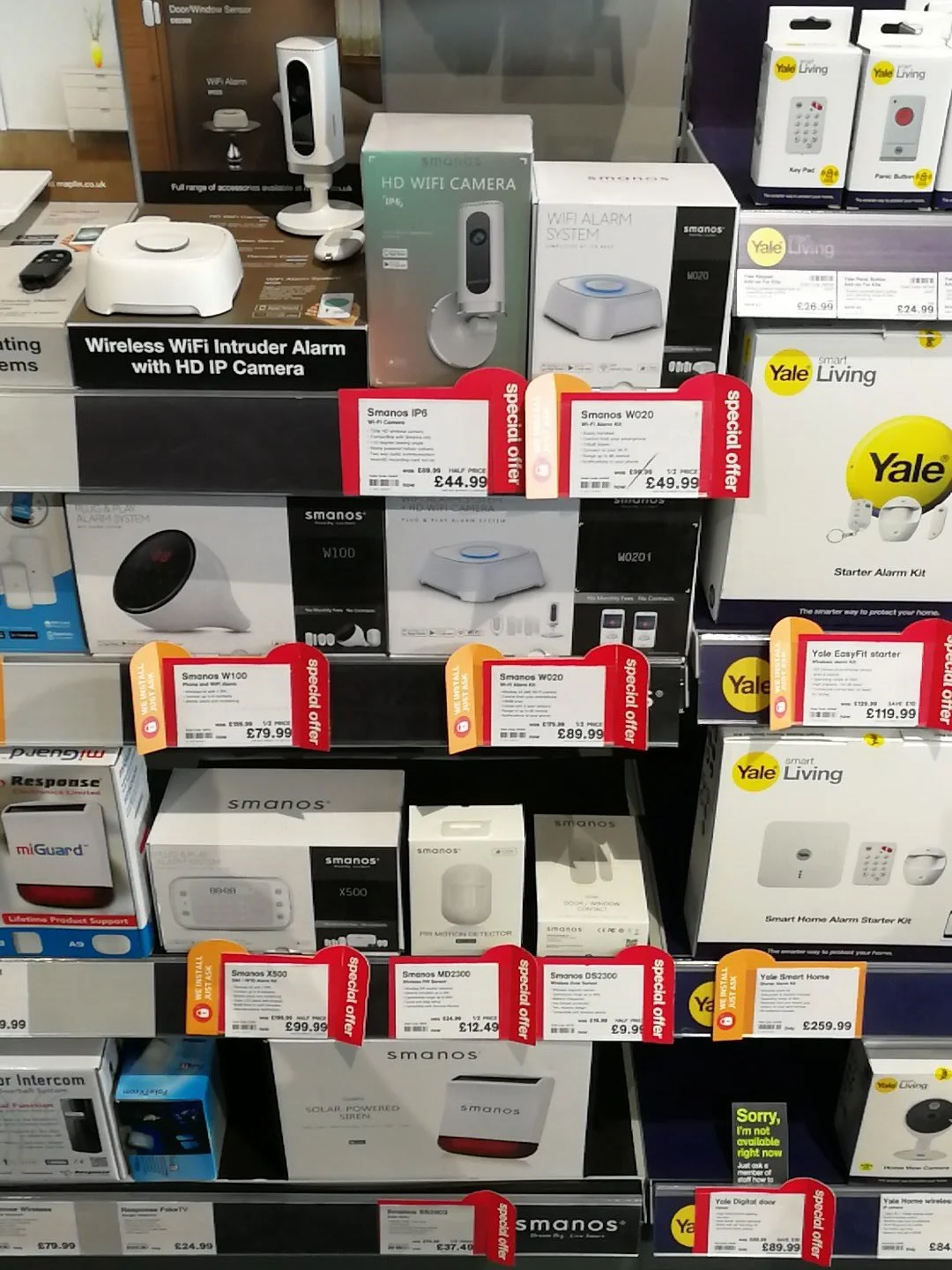
My earlier work representing Smanos across the UK and DACH showed why local ownership matters: distributor coverage, retailer conversations, promotions and manufacturer decisions still had to be connected. I explore that operating gap in more detail in Why appointing a European distributor is only the beginning.
When direct retail is realistic
Retail is attractive because the outcome is visible. A recognisable listing can increase reach, establish credibility and place the product in front of customers who would not actively search for the brand.
It is also usually the route with the greatest number of dependencies.
The buyer needs a clear category reason to list the product. The commercial model must accommodate retail margin, promotions, returns and sometimes marketing support. Stock must be available when required. Product data, packaging and compliance need to be ready. If the product needs explanation, merchandising and staff enablement may matter as much as the listing itself.
My work on a connected-product rollout across 16 Harvey Norman stores in Ireland reinforced this point. The listing was only one part of the project. Distribution, local stock, the point-of-sale manufacturer, store presentation and staff preparation all had to meet on the shop floor.
I favour a direct retail route when:
- The product has credible sales evidence
- The category and customer benefit are easy for a buyer to understand
- Retail margins and promotional requirements are sustainable
- Local stock, returns and account support are ready
- Someone can own the relationship after the initial buyer meeting
- The brand can support the launch without depending on immediate volume
Why a hybrid route is often the practical answer
The choice is not always Amazon or distributor or retail. A controlled sequence can use each route for what it does best.
For example, Amazon may establish demand and customer language. A distributor may then provide stock, logistics and access to a wider customer base. Direct retail conversations can begin while that evidence and infrastructure are being built rather than waiting for every earlier stage to finish.
The important word is controlled.
A hybrid route fails when every channel is opened without clear ownership. Different prices appear, stock becomes fragmented and partners do not know whether they are expected to invest or simply fulfil orders generated elsewhere.
A useful hybrid plan defines:
- The role of each channel
- Who owns the customer and the stock
- The intended pricing position
- Which evidence moves the business to the next stage
- How conflicts will be handled
- Who is accountable for weekly execution
The scorecard I use
I compare the options across eight practical factors.
1. Existing proof
Has the product already sold successfully in a comparable market, or is the UK itself being asked to prove the proposition?
2. Product explanation
Can the product sell from content and reviews, or does it need demonstration, installation advice or a consultative sale?
3. Channel economics
After marketplace fees, distributor margin, retail margin, promotion, fulfilment and returns, is there still a viable business?
4. Operational readiness
Who holds stock? How quickly can it be replenished? Who handles returns, technical questions and replacements?
5. Local ownership
Which person will move the work forward after launch? A channel without an owner normally loses momentum.
6. Price interaction
Will the proposed marketplace price give distributors and retailers enough room to participate?
7. Speed of learning
Which route can answer the most important unknown without creating an expensive long-term commitment?
8. Strategic value
Does the route only create revenue, or does it also build useful proof, customer access, operational capability or future partnerships?
I do not apply the scorecard mechanically. Its purpose is to expose the assumptions hidden inside an attractive channel plan.
Common mistakes I see
The first is choosing a famous customer or partner instead of a workable route. A national retailer is not automatically better than a specialist distributor if the business cannot support the listing.
The second is treating an introduction as execution. A buyer conversation or signed distribution agreement creates an opportunity; it does not create sell-through.
The third is allowing Amazon pricing to develop independently from the rest of the channel. That can make later retail and distribution conversations much harder. Why Amazon success can make European retail expansion harder explains how stock ownership, marketplace pricing and partner economics become connected.
The fourth is entering several European markets at once before the first operating model works. Europe offers scale, but it also multiplies stock, language, compliance, support and ownership requirements.
Finally, brands often underestimate the internal time required. Even when external partners do much of the work, somebody inside or alongside the company must answer questions, approve decisions and keep priorities moving.
My preferred decision
I normally recommend the narrowest route capable of testing the most important commercial assumption.
That might be an Amazon launch built around a small, suitable range. It might be one committed distributor with a defined account plan. It might be an early retail conversation supported by existing evidence. In some situations it is a hybrid, but with clearly separated roles and checkpoints.
The objective is not to select a permanent winner on day one. It is to build a route that produces evidence, protects future options and can be operated with the resources the company genuinely has.
If your product already works in another market and you are deciding how to enter the UK, my UK and European market-entry work begins with this route assessment and turns it into a practical channel plan.